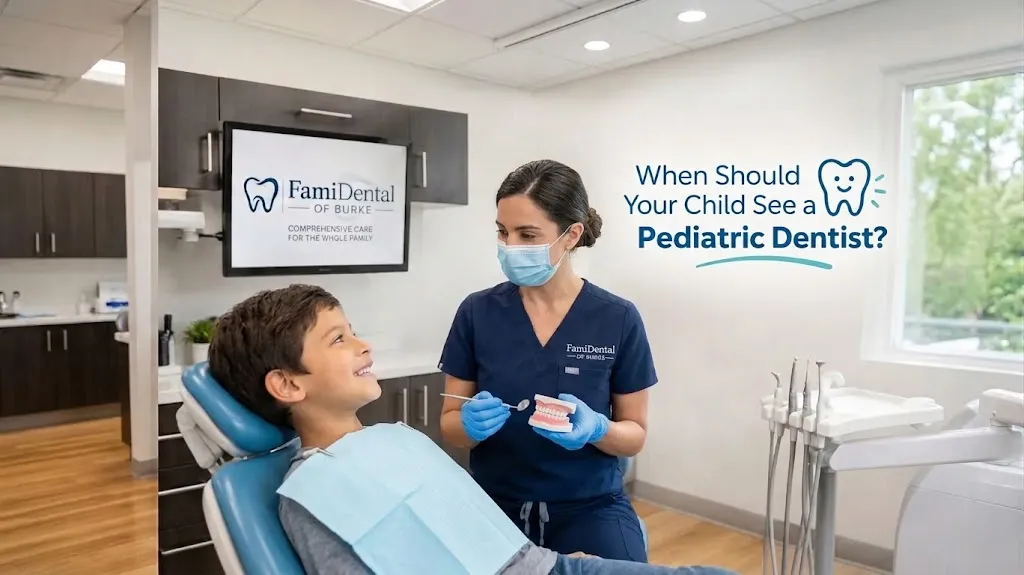
When Should My Child See a Pediatric Dentist for the First Time?
As a parent, it's easy to assume dental visits can wait until your child has a full set of teeth — or until they start complaining about a toothache. But early dental care plays a bigger role in your child's long-term oral health than most parents realize. Here's what you actually need to know about timing that first visit, and what to expect once you're there.
The Simple Rule: First Tooth, First Birthday
The American Academy of Pediatric Dentistry and the American Dental Association both recommend the same guideline: your child should see a dentist by their first birthday, or within six months of their first tooth erupting — whichever comes first.
For most babies, that means their very first dental visit happens somewhere between 6 and 12 months old. It may feel early, but this isn't about deep cleanings or complicated treatment. It's about catching potential issues before they become real problems, and helping your child grow up comfortable with the dentist's chair instead of afraid of it.
Why So Early?
A few real reasons this timeline matters:
- Baby teeth matter more than you'd think. Primary teeth hold space for permanent teeth and guide their proper alignment. Untreated decay in baby teeth can affect the development of the adult teeth underneath them — which is part of why routine preventive care matters from an early age.
- Early detection saves you money and stress. Small issues — like early signs of decay, teething complications, or bite problems — are far easier and less expensive to address early than after they've progressed.
- It builds comfort, not fear. Children who start seeing a dentist early tend to develop far less dental anxiety than kids whose first visit happens after a painful problem already exists. A calm, low-pressure first visit sets the tone for every visit after it.
- Parents get real answers. A first visit is as much for you as it is for your child. It's the right time to ask about teething, thumb-sucking, pacifier use, proper brushing technique for tiny teeth, and fluoride — questions that are hard to Google your way through with confidence.
What Actually Happens at the First Visit
If you're picturing your toddler squirming through X-rays and a full cleaning, you can relax. A first pediatric dental visit is typically brief and gentle:
- A visual check of the teeth, gums, and jaw development
- A conversation about feeding habits, teething, and oral hygiene at home
- Guidance on brushing technique and when to start using fluoride toothpaste
- An opportunity for your child to simply get comfortable in the chair, meet the dental team, and associate the office with a positive, low-stress experience
There's rarely any cleaning or treatment involved at this stage — the goal is simply familiarity and prevention.
Signs You Shouldn't Wait
While the first-birthday guideline is a good general rule, certain signs mean you shouldn't wait that long:
- Visible white or brown spots on your child's teeth
- Signs of pain or discomfort while eating or chewing
- Prolonged thumb-sucking or pacifier use past age 2–3
- Any injury to the mouth, teeth, or gums
- Concerns about tooth alignment or jaw development
If any of these apply, it's worth scheduling a visit sooner rather than later, regardless of your child's age. If a dental injury or sudden pain is involved, our emergency dentistry services are available for the whole family, including children.
Making Dental Visits a Normal Part of Life
The biggest long-term benefit of an early first visit isn't the visit itself — it's the habit it starts. Kids who grow up with regular, low-stress dental checkups are far more likely to keep up good oral health habits into adulthood, and far less likely to develop the dental anxiety that keeps so many adults from going to the dentist at all.
A few things that help along the way:
- Talk about the dentist positively at home — avoid words like "hurt" or "shot," even if you mean well
- Read a children's book about visiting the dentist before the appointment
- Choose a practice that welcomes young patients as part of routine family care, and that will refer you to a specialist if your child's needs call for it
- Keep visits on a regular 6-month schedule once they begin, just like for adults
General Dentist vs. Pediatric Dentist: What's the Difference?
It's worth understanding the distinction, because it affects where you should go. A pediatric dentist completes additional years of specialized training beyond dental school, focused entirely on the unique needs of infants, children, and teens — including kids with more complex medical needs, significant anxiety, or behavioral considerations that require specialized techniques.
A general or family dentist is trained to treat patients of all ages, including children, and is well-equipped to handle routine checkups, cleanings, and preventive care for most kids — often in the same comfortable, familiar setting the rest of the family already visits.
Neither is "better" outright — it depends on your child's needs. Many families are perfectly well served seeing a general dentist for their child's routine care, especially once the child is a bit older and cooperative in a standard dental setting.
Where FamiDental Fits In
FamiDental is a general and family dental practice, not a pediatric dental specialty office. That means we're happy to see your children for routine checkups, cleanings, and preventive care as part of caring for your whole family in one place — but we're not equipped to handle the more complex pediatric cases that a specialist trains for.
If, during a visit, we find that your child would benefit from specialized pediatric care — because of anxiety, a complex procedure, a very young age, or a particular medical consideration — we'll tell you plainly and refer you to a trusted pediatric dental specialist rather than trying to manage something outside our scope. Your child's comfort and care always come first, even when that means sending you elsewhere.
At both our Burke and Fredericksburg (Falmouth) locations, our bilingual English/Spanish team is happy to see your family's routine dental needs together, and to guide you toward the right specialist if your child ever needs more specialized care. Learn more about what to expect at our Burke or Fredericksburg offices, or explore our full range of dental services for the whole family.
Ready to schedule your child's first visit? Contact our Burke office or our Fredericksburg/Falmouth office today.
Written by Waldo Valdivia, DDS — Owner and Founder of FAMIDENTAL