Dental Sealants: What They Are and Why Kids (and Adults) Need Them
If you've ever wondered why your dentist keeps mentioning sealants at your child's checkup — or whether you, as an adult, could benefit from them too — you're not alone. Dental sealants are one of the simplest, most effective ways to prevent cavities, yet many patients don't fully understand what they do or who needs them.
What Are Dental Sealants?
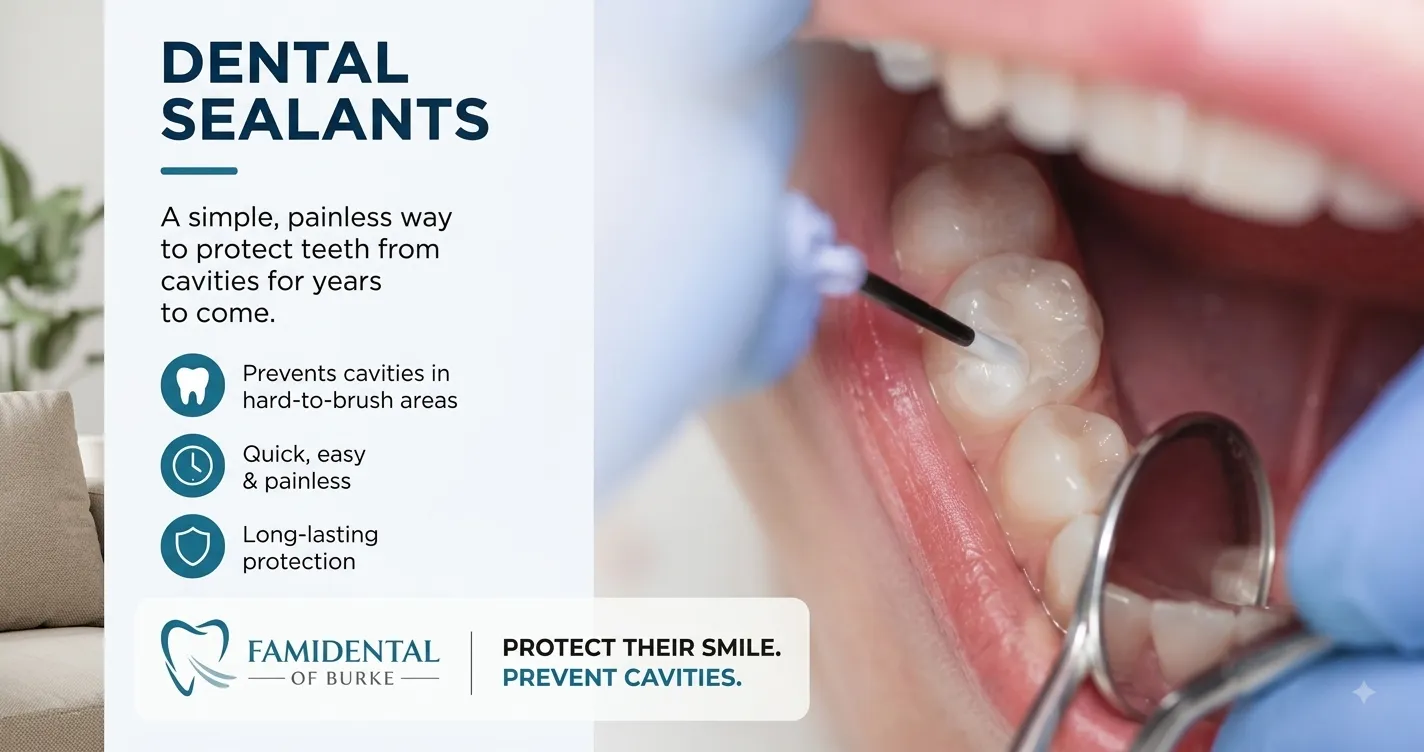
A dental sealant is a thin, protective coating applied to the chewing surfaces of your back teeth (molars and premolars). These teeth have deep grooves and pits that are notoriously hard to clean with just a toothbrush — food particles and bacteria can settle into those crevices and lead to decay over time.
The sealant acts like a shield, filling in those grooves so bacteria and food debris can't get trapped there. The procedure itself is quick, painless, and doesn't require any numbing or drilling. Your dentist simply cleans the tooth, applies the sealant material, and cures it with a special light — the whole process takes just a few minutes per tooth.
Who Should Get Sealants?
Children and teenagers are the most common candidates. Sealants are typically recommended as soon as the permanent molars come in — usually around age 6 for the first molars and age 12 for the second molars. Applying sealants early, before decay has a chance to start, gives kids years of extra protection during the cavity-prone years.
Adults can benefit too. If you have deep grooves in your molars and haven't developed cavities in those teeth yet, sealants can still provide meaningful protection — especially if you're prone to decay or have a harder time reaching those back teeth with a toothbrush.
How Long Do Sealants Last?
With proper care, sealants can last several years — often five to ten — before they need to be checked or reapplied. During your regular dental visits, we'll check that the sealant is still intact and holding up well. If it starts to wear down, it can simply be touched up or replaced.
Do Sealants Replace Brushing and Flossing?
No — sealants are an added layer of protection, not a substitute for good oral hygiene. You'll still want to brush twice a day, floss daily, and keep up with regular cleanings. Think of sealants as extra insurance for the hardest-to-clean spots in your mouth.
Are Sealants Covered by Insurance?
Many dental insurance plans, including Medicaid in Virginia, cover sealants for children at little to no out-of-pocket cost, since they're recognized as an effective preventive measure. Coverage for adults varies more by plan, so it's worth checking with your provider or asking our team to verify your benefits.
Protect Your Smile Before Problems Start
Sealants are one of the easiest ways to prevent cavities before they happen — for kids and adults alike. If you're wondering whether sealants are right for you or your child, our team at FAMIDENTAL is happy to take a look and walk you through your options.
Ready to schedule a visit? Contact our Burke or Fredericksburg/Falmouth office today to learn more about dental sealants and other preventive care options for your whole family.
Written by Waldo Valdivia, DDS — Owner and Founder of FAMIDENTAL